Technical Approach
Material Construction
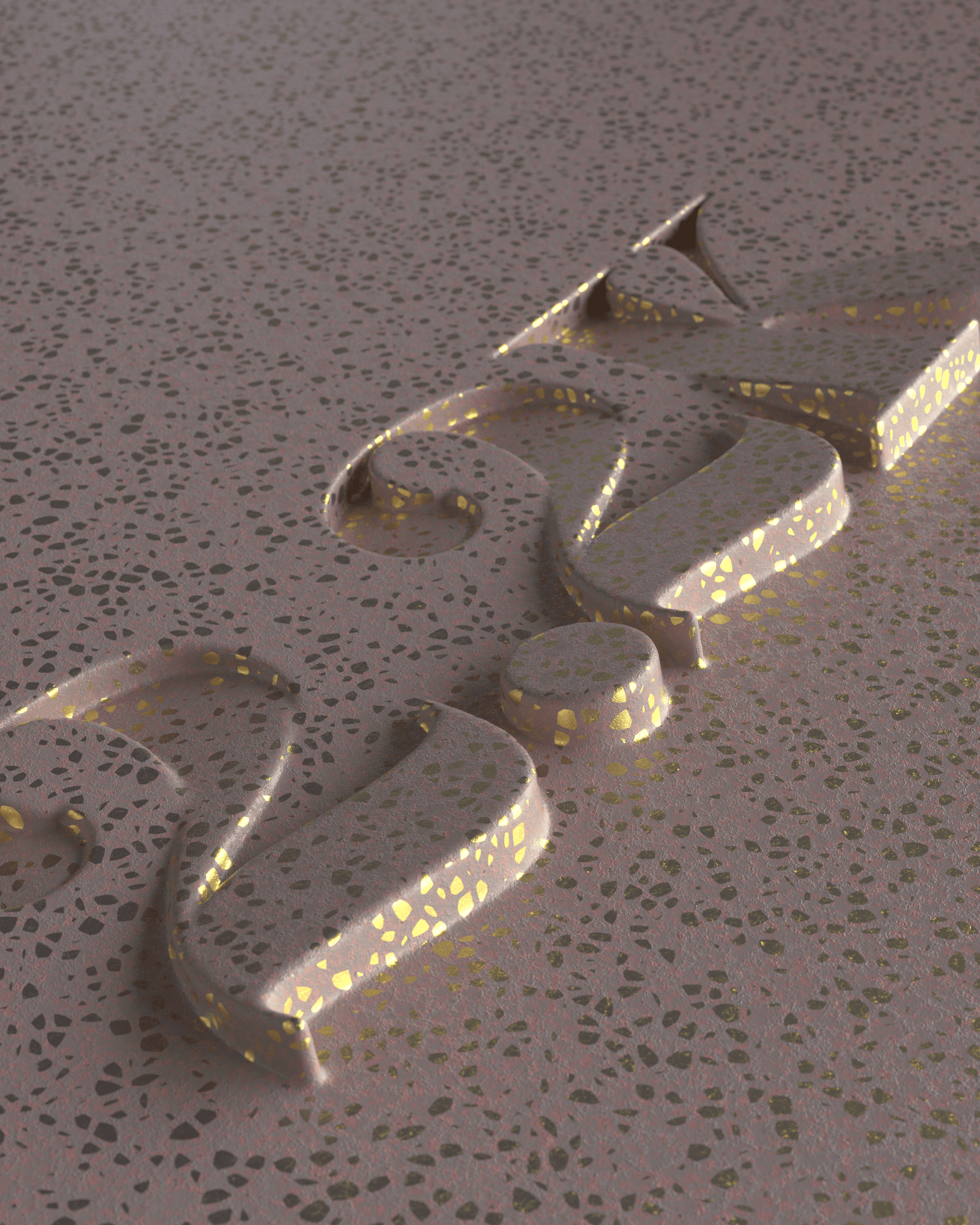
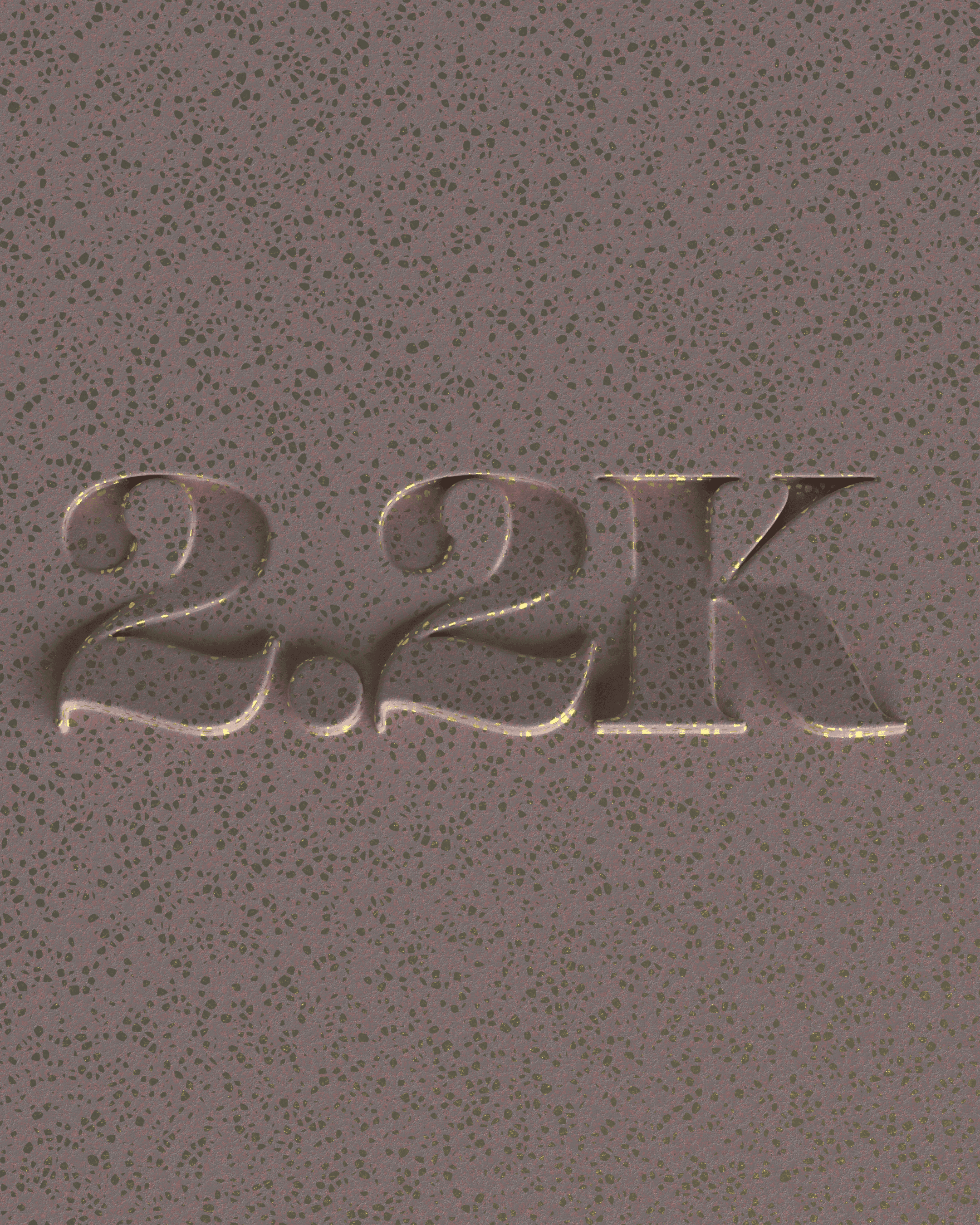
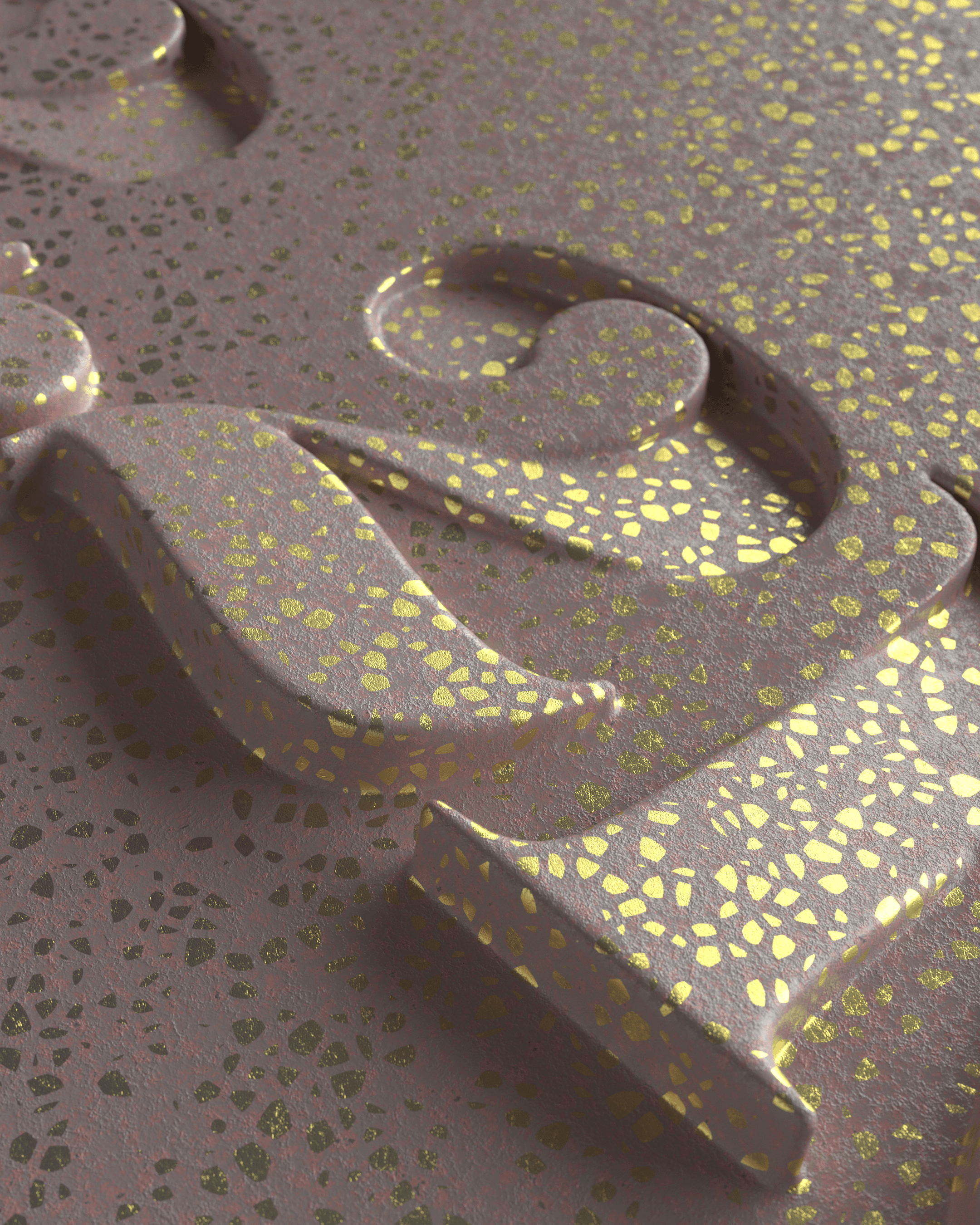
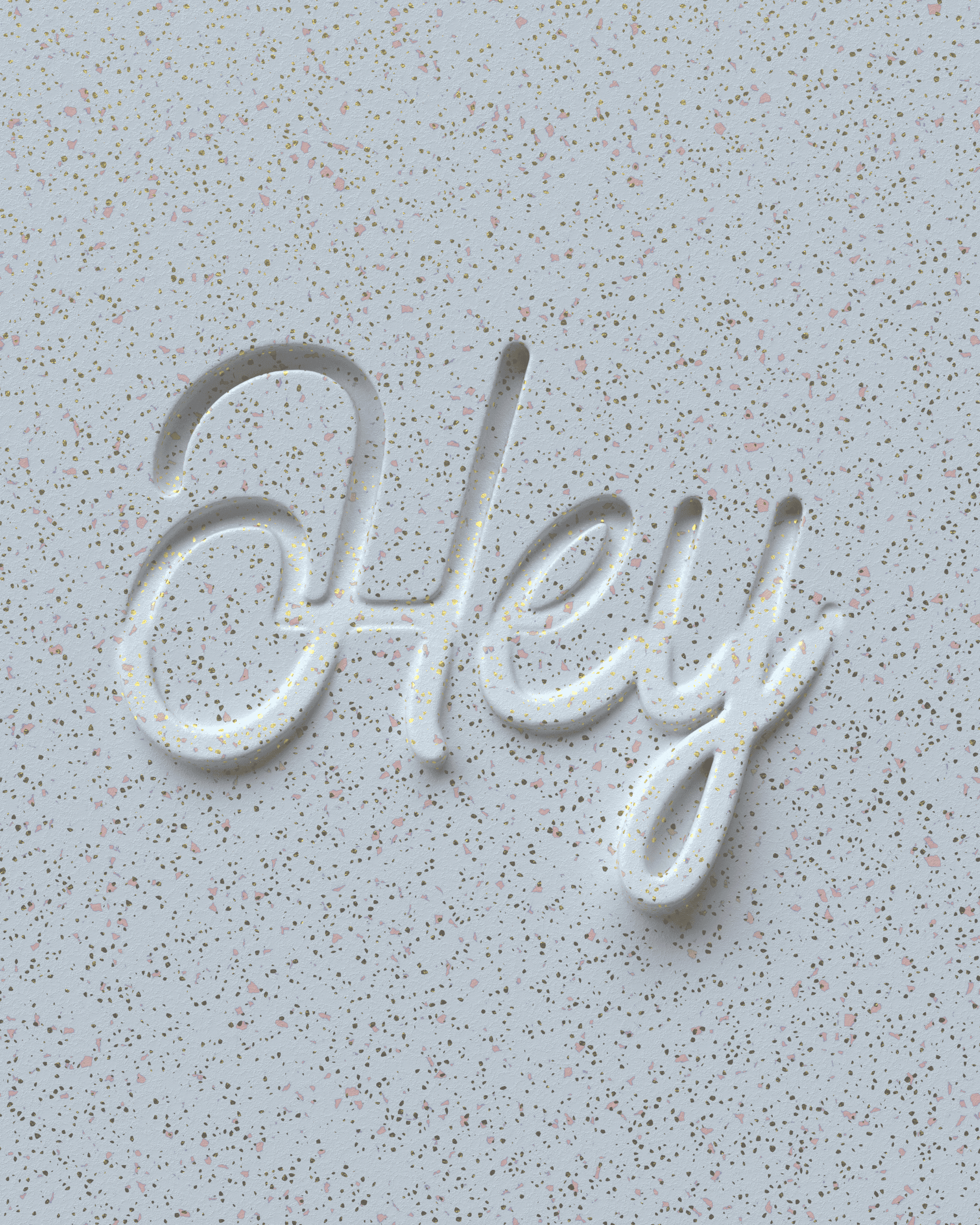
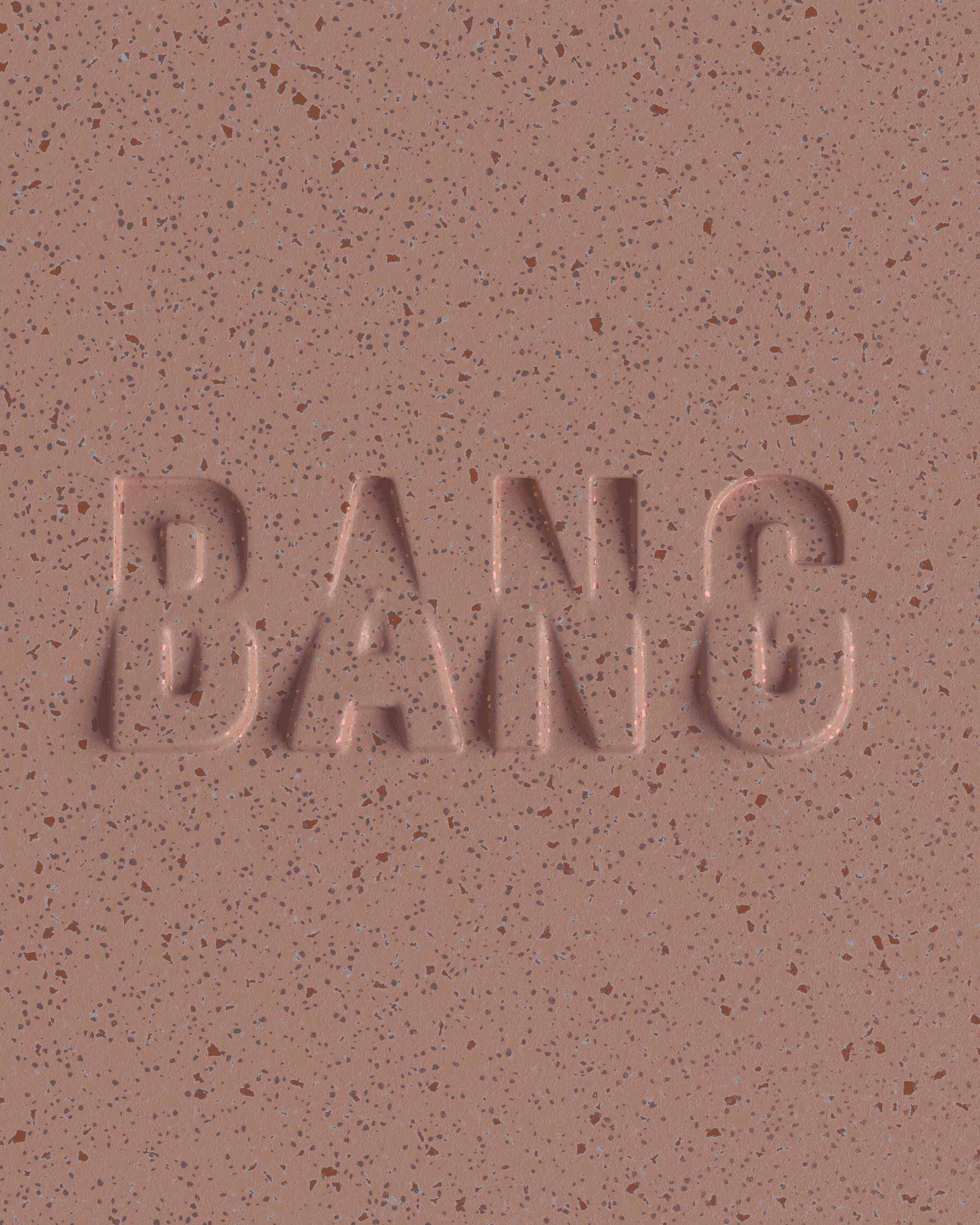
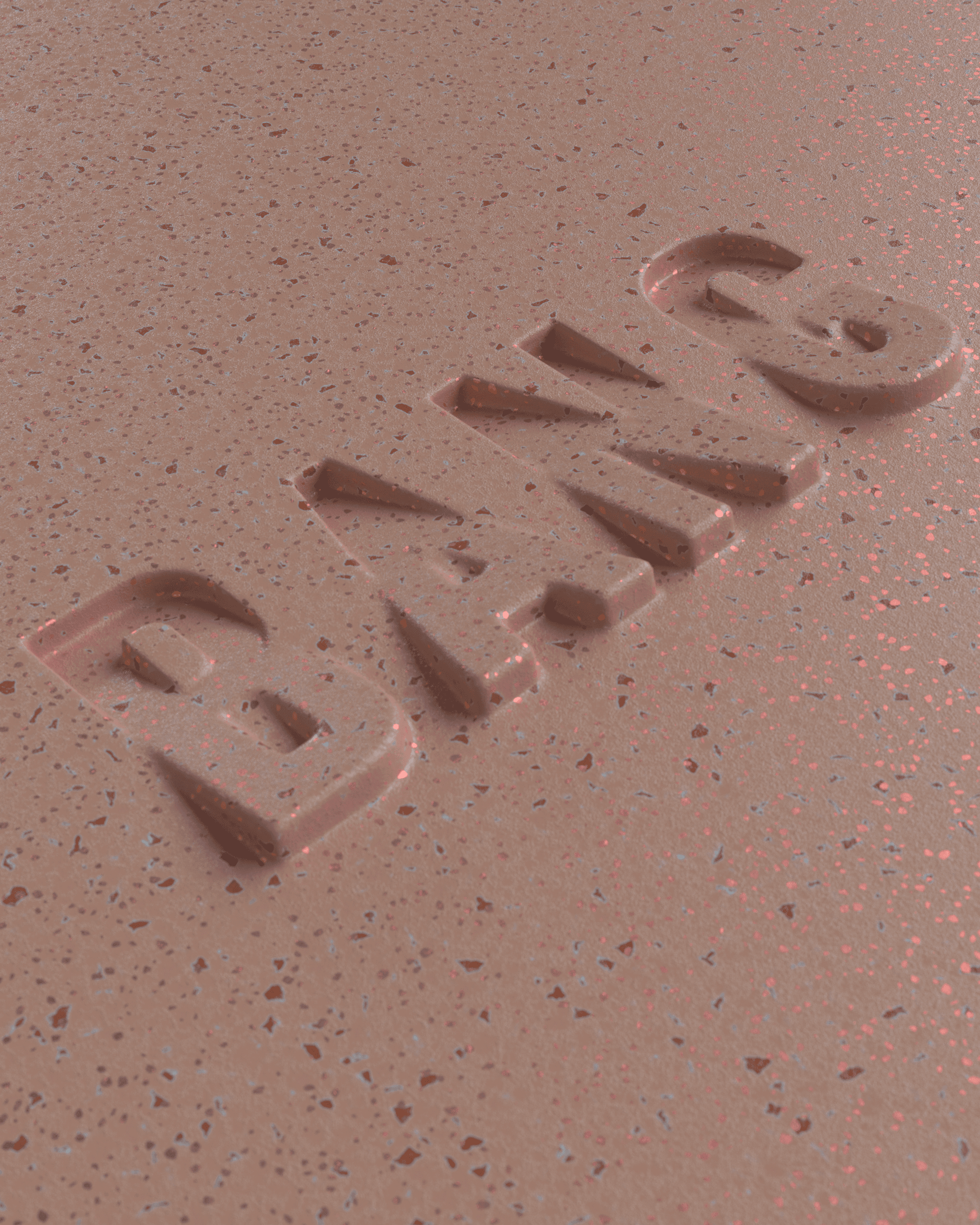
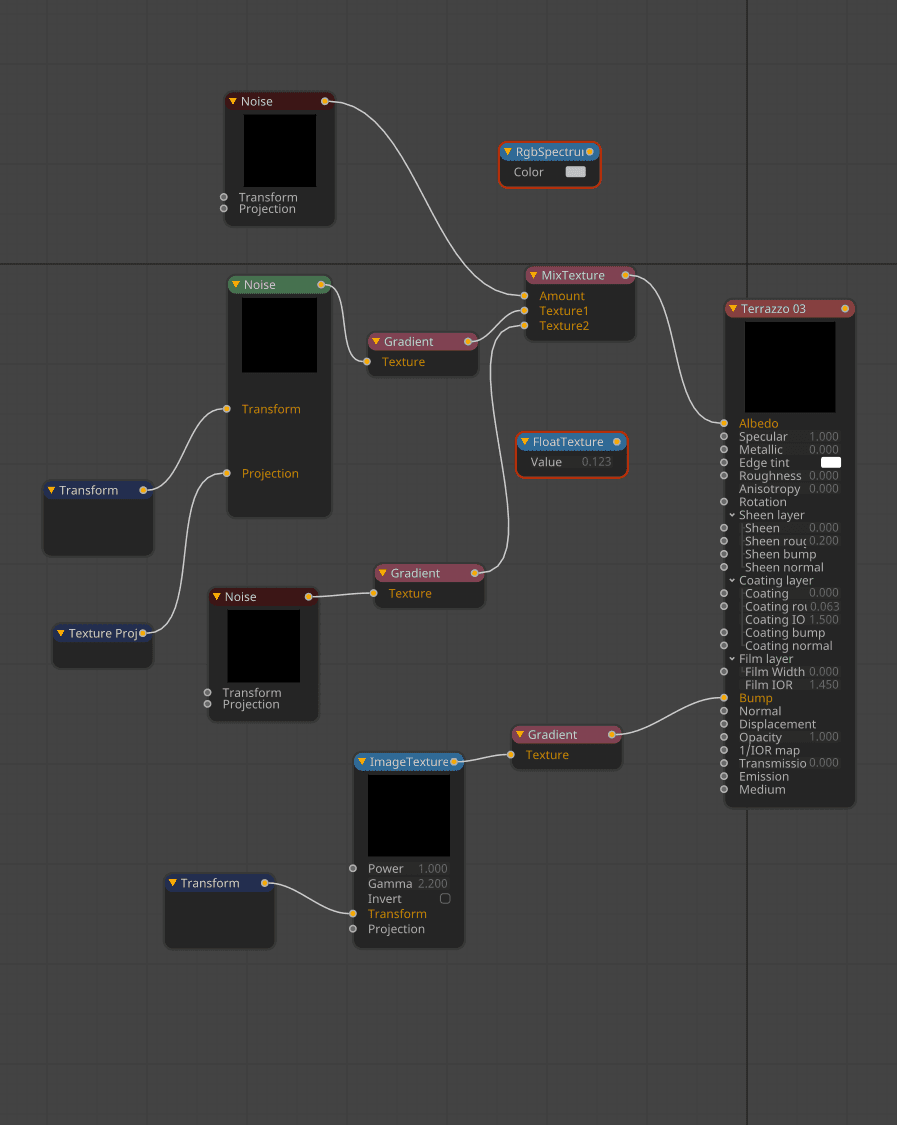
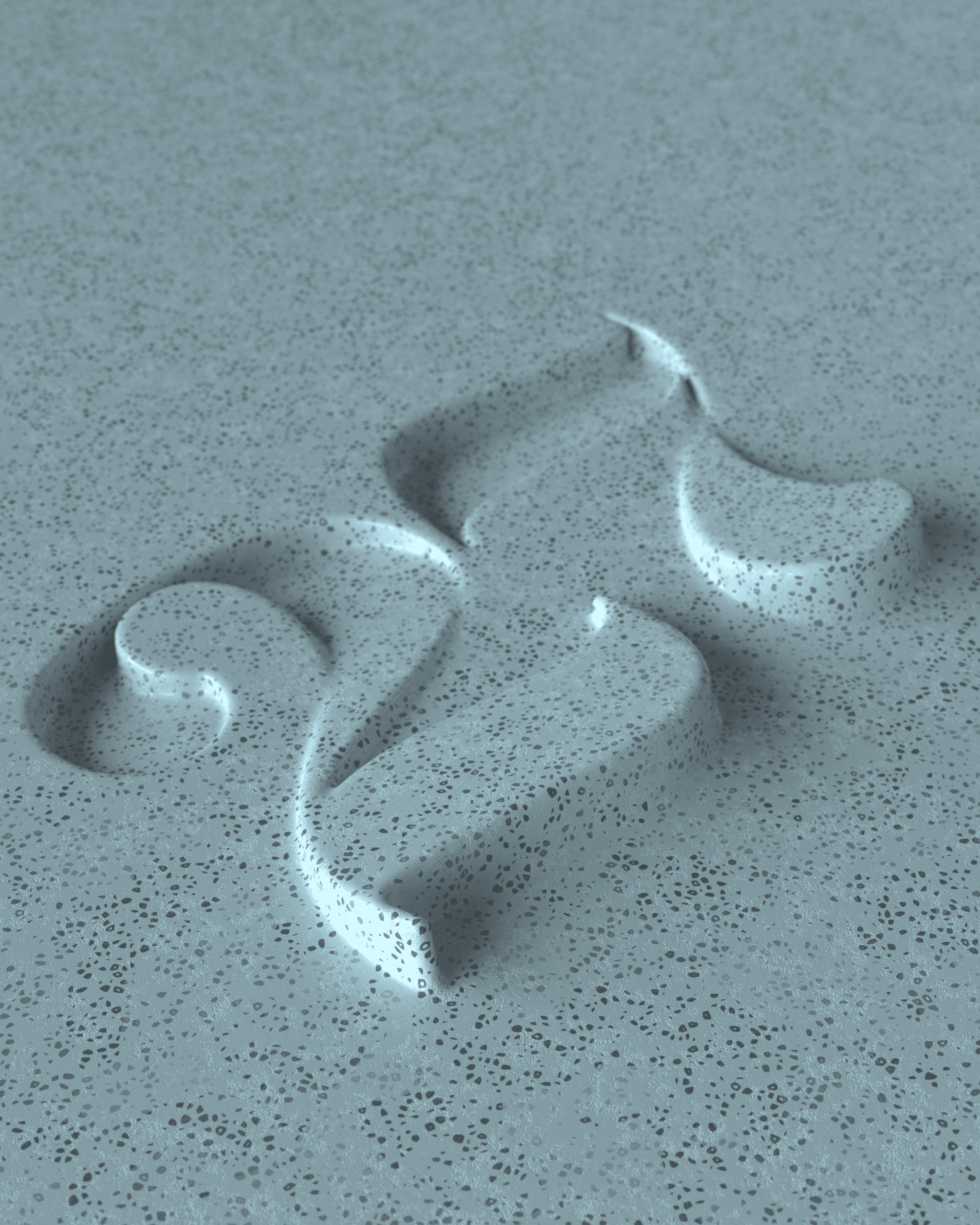
The terrazzo material typically consists of a base colour with scattered aggregate particles of varying sizes and hues. The shader combines noise-based distribution for the chips with proper subsurface scattering to achieve the characteristic semi-translucent quality of polished resin composites. Surface normals are critical, the shallow relief creates gentle highlight and shadow transitions that define the letterforms.
Lighting Considerations
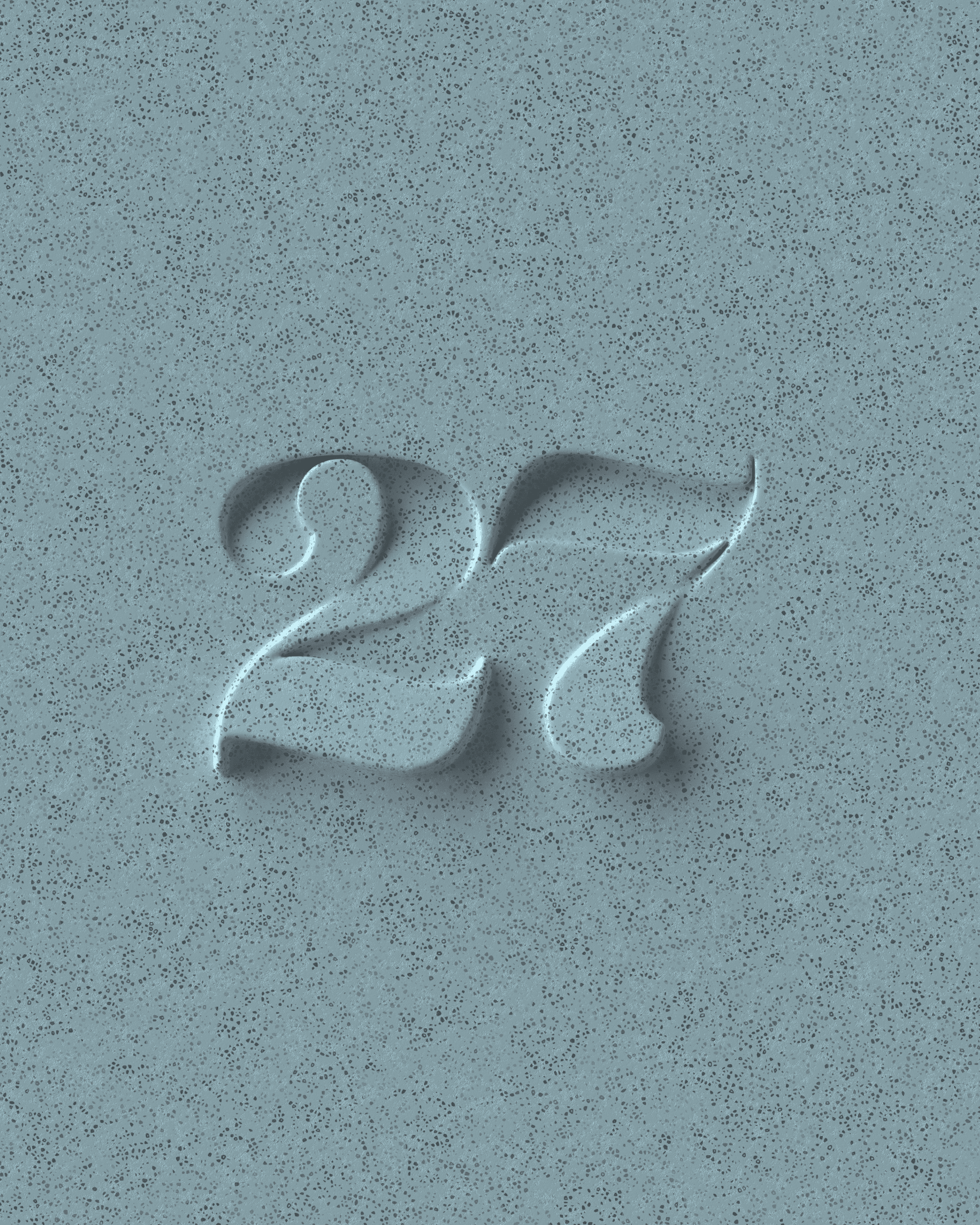
Everything in this style depends heavily on lighting angles. Grazing light emphasises the dimensional quality, whilst too-direct lighting flattens the effect. HDRI environments with soft, directional components work well, often supplemented with targeted area lights to accentuate the embossed edges.
Rendering Setup
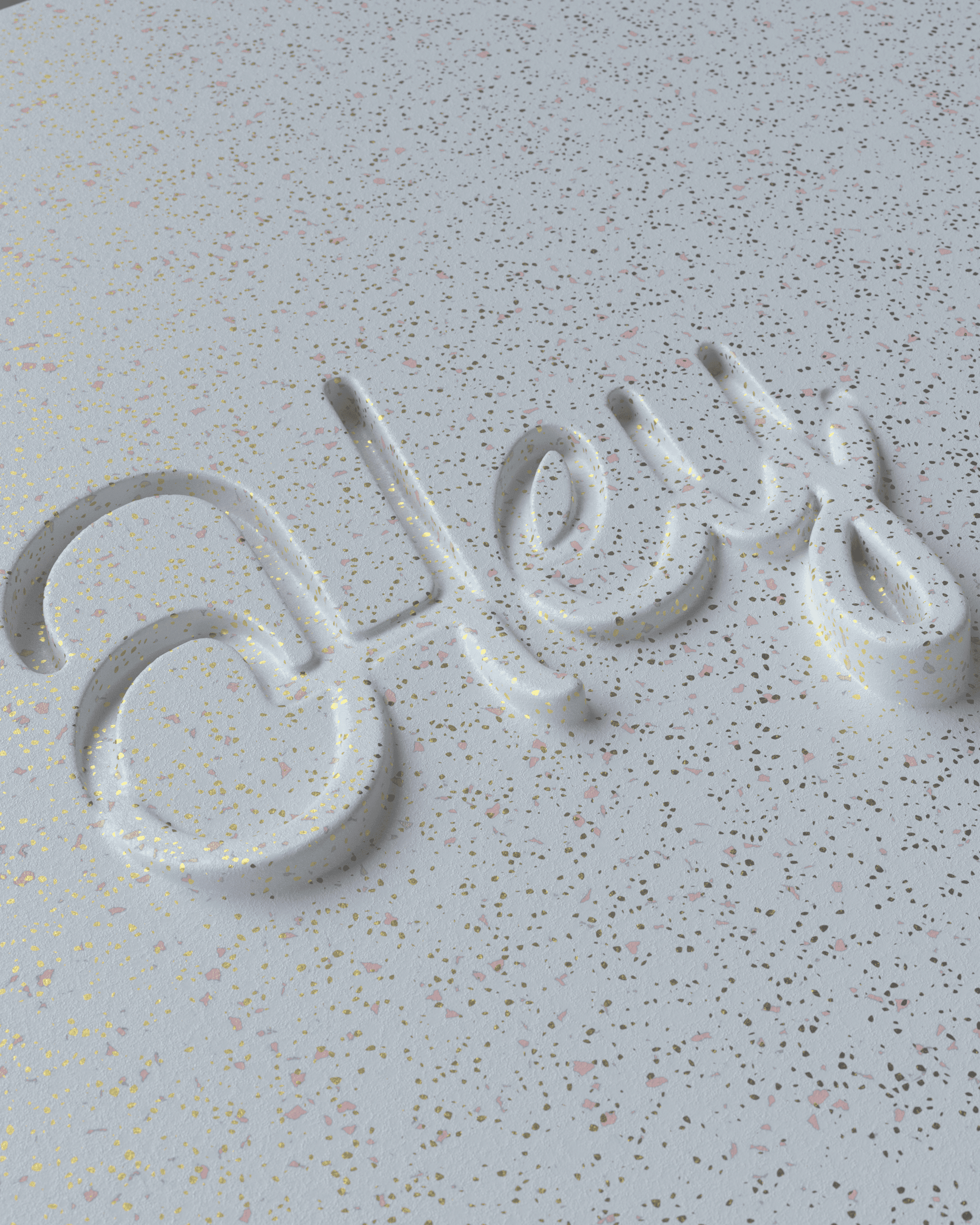
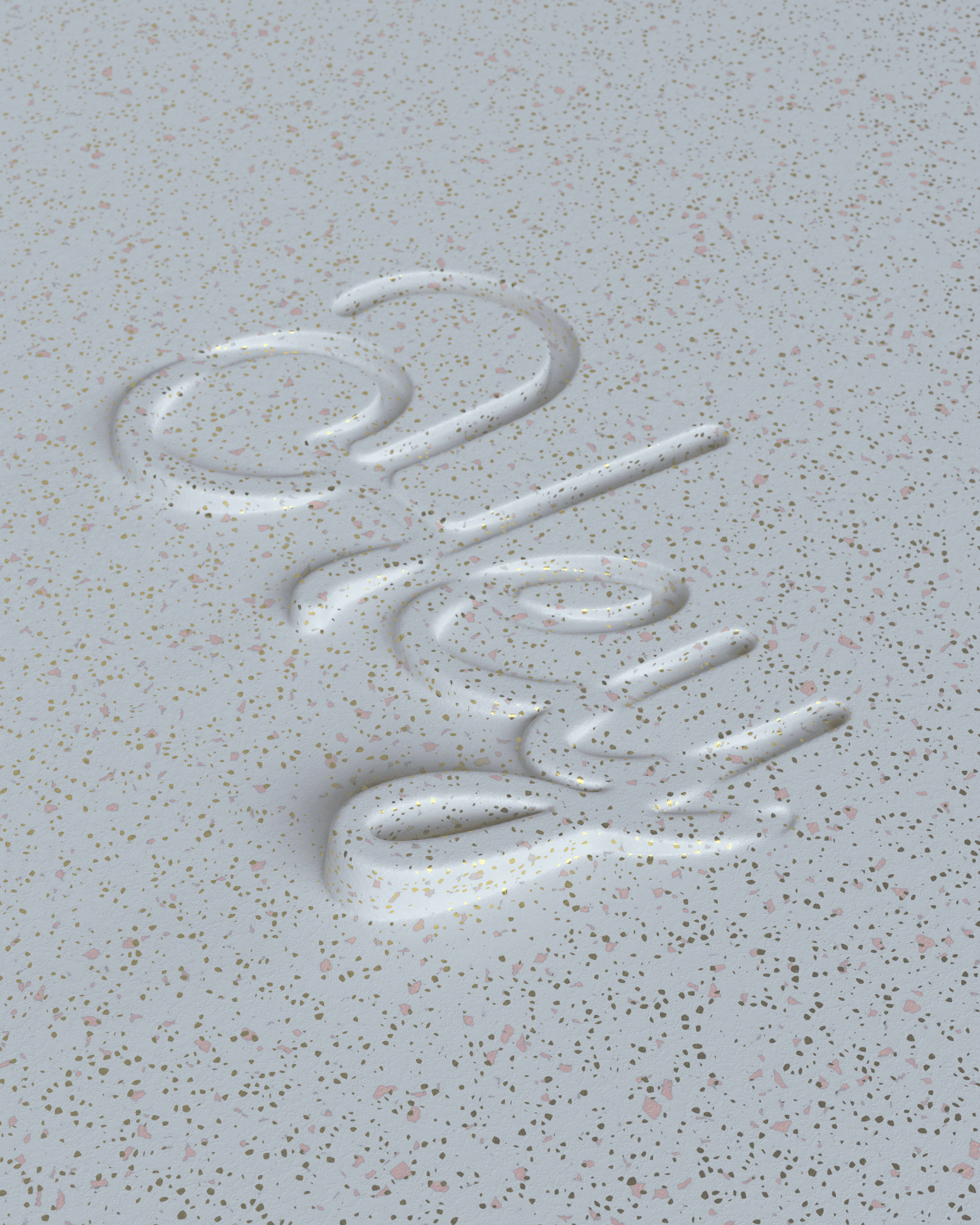
Octane's path tracing handles the subtle surface variations effectively, with particular attention needed for:
Adequate sampling to resolve the fine aggregate detail
Proper IOR values for resin materials (typically 1.4-1.5)
Slight roughness variation to simulate polished but imperfect surfaces
Depth of field to enhance dimensional perception
The monochromatic approach prioritises form over decoration, letting the interplay of geometry and light carry the visual interest.